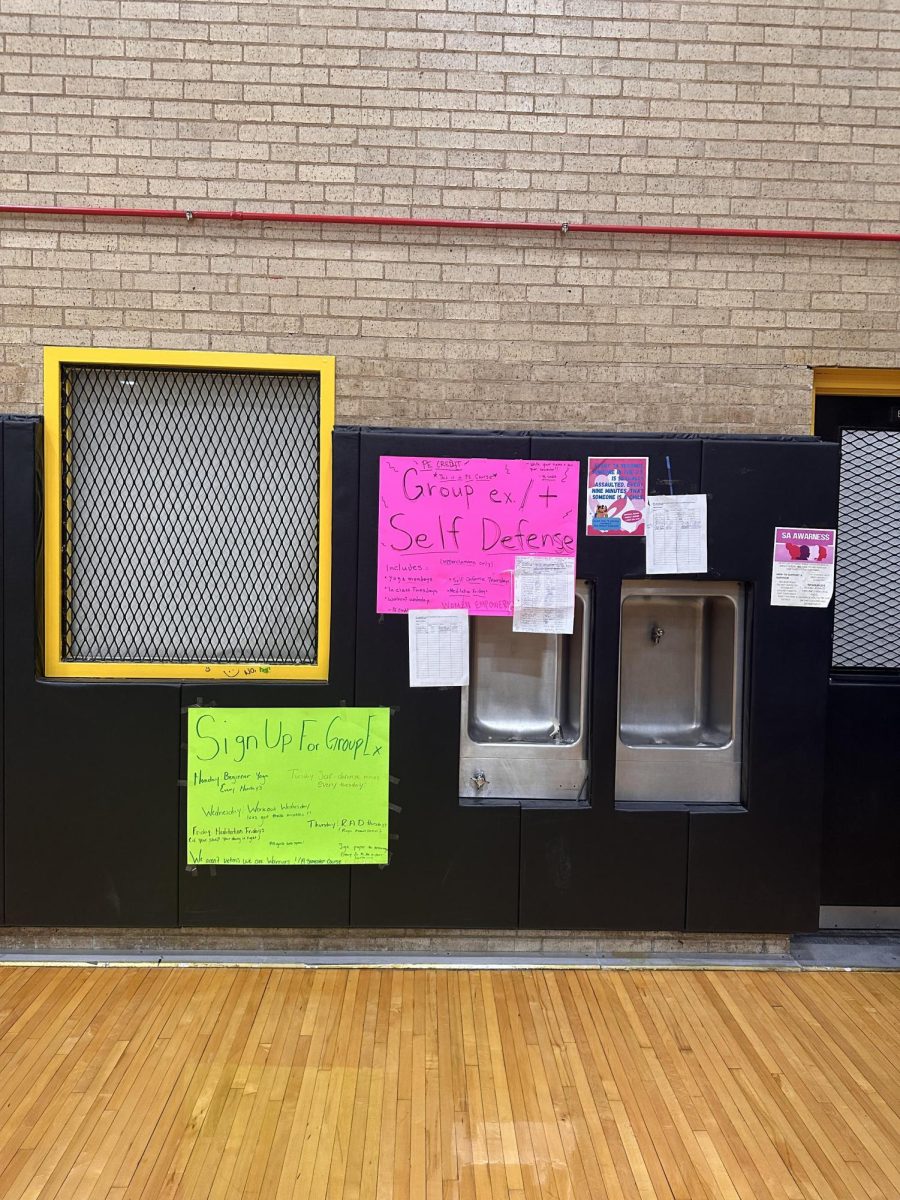
Group Exercise/Self-Defense Physical Education is one of the least known, yet most impactful electives offered to female upperclassmen at South. While many students enroll in familiar classes such as Fitness or Team Games, far fewer know that Group Exercise exists, despite the fact that it provides essential skills in self-defense, wellness, confidence, and community-building.
This course, taught by Mary Rounce and Mia Tritch, emphasizes RAD (Rape Aggression Defense) skills and blends strength training, yoga, empowerment lessons, and mindfulness into a structured weekly routine.
This semester, two sections are running. Next semester, none are scheduled, simply because too few students signed up. As interest grows, both teachers and students are hoping this article helps raise awareness so the class can run every semester and possibly for the full year.
A current student, senior Asmitha Pallath, who took the class twice. Once in the first semester of last year and again this fall described the weekly routine of this class:
- Monday: Yoga or group workout (rotating between bodyweight exercises, dumbbells, circuits, and strength training)
- Tuesday: Self-defense, empowerment, or life-skills lesson
- Wednesday: Partner-based strength training
- Thursday: Hands-on RAD self-defense skills (verbal commands, stances, escapes, situational practice)
- Friday: Meditation and mindfulness (breathing, grounding, guided focus)
This structure works on both physical strength and emotional regulation. It helps students leave class feeling stronger while also learning how to stay aware in stressful environments.
“As a girl, it is easy to feel threatened or scared by the stories we hear,” Pallath said. “But this class has taught me that I actually do have a high chance to succeed in defending myself against danger, and even beyond that, it has helped me gain confidence in who I am as a person.”
Others taking the class this year also agree with Pallath’s experience. Out of 25 surveyed students, 76% said the self-defense portion of the class has been “extremely useful,” while the remaining 24% said it was “useful.” Not a single student rated it somewhat useful or not useful at all.
Students who took this class expressed that they appreciated the RAD lessons, and that the mindfulness days helped them regulate stress. They also appreciated the supportive, close-knit environment created by the small class size.
One student described watching a documentary called “The Hunting Ground,” which the teachers used to educate girls about sexual assault on college campuses. Another wrote about realizing how helpful the skills were when she felt unsafe walking home one evening.
“Our students have not only gained skills in self defense and strength training,” Rounce said when asked about the impact of the class. “They have gained the confidence and self awareness to step into the world knowing they are strong, capable women no matter what scenario comes at them.”
Rounce aims to have the class run for both semesters for the following reasons:
Safety and Confidence: “Equipping young women with self-defense skills prepares them to protect themselves and fosters confidence both in and out of school.”
Health & Wellness: “A group exercise course tailored to females provides opportunities for lifelong fitness habits, teamwork, and mental health benefits.”
Equity in Education: “Offering this course every semester guarantees that all female students have equal access, regardless of grade level or scheduling conflicts.”
Real-World Skills: “Beyond physical education, self-defense is a critical life skill that promotes independence, empowerment, and resilience.”
Rounce also ended with one request, “spread the word to get more sections of this! It is a PE credit.”
The importance of this course becomes especially clear when looking at the realities facing teens and young women. 1 in 4 women endure attempted or completed rape in their lifetime, and over half go through some form of sexual violence. One in nine high school girls experience sexual assault or coercion, and 26% of college women experience some form of sexual assault during their undergraduate years. Ages 12 to 34 are the highest-risk years, with more than half of incidents occurring between ages 18 and 24, which is the period when many students leave home, begin college, or enter new environments. In most cases, the perpetrator is someone the victim knows, which makes situational awareness, intuition, and assertive boundaries just as important as physical defense skills.
Even with these challenges, the tone surrounding Group Exercise is not fearful- it’s empowering. Students describe feeling more capable, aware, and confident after completing the course, and many say they gained tools they’ll carry into college and adult life.
The biggest obstacle to expanding the class is simply the lack of interest. Students who know about the course almost always recommend it, but many don’t hear about it until it’s too late to enroll. Increasing awareness could allow the class to run every semester and give girls the opportunity to strengthen skills rather than lose them after just a few months.