Earlier this year, Donald Trump was inaugurated as the 47th President of the United States. Once inaugurated, he passed numerous executive orders, including the withdrawal of the U.S. from the Paris Climate Accords and the World Health Organization, which were immensely unpopular and resulted in extreme polarization between the right and left wings. Democrats, moderates, and even some Republicans believe that Trump’s actions represent those of an authoritarian ruler and see him increasing his power by the day, directly contradicting the system of checks and balances on which this nation was founded.
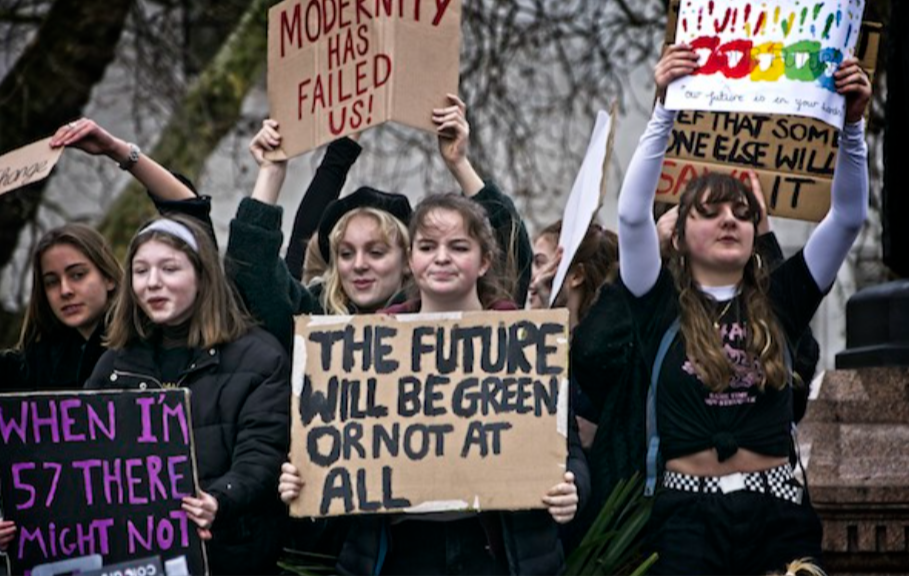
Such centralization of power has prompted disapproval among Americans who believe that American democracy is being threatened. Across the nation, millions of Americans protested Trump’s policies on June 14, and, more recently, on October 18. These demonstrations, called the No King’s protests, outwardly criticized Trump’s actions by declaring his actions authoritarian and comparing him to a king, an image that was depicted on many of the protesters’ signs. During the actual protests, countless people waved American flags, displayed signs, and marched in parades.
“The Supreme Court is shockingly partisan, making decisions clearly not based in existing law,” said protestor and lawyer Kim Jansen when asked why she participated. “Trump also uses ICE, imposes tariffs, and it seems that the only rule in this country seems to be what Trump wants it to be,”
These views seemed to be shared by many other protesters, believing in the American ideals of a three-branch government instead of a monarch.
As for the atmosphere of the protest, Jansen described it to be “surprisingly hopeful and joyful.” She shared a similar fear among many of the protesters that the National Guard or ICE might be deployed in the city, as they had been in Los Angeles, but after some time even she was “shocked at how few Chicago police were there. They even showed up with the expectation that this was going to be a peaceful protest.”
Despite the thousands of young people who participated in No Kings protests, there is a common notion that teenagers are indifferent to politics.
This sentiment is largely bolstered by the fact that 84% of teenagers distrust the news. This statistic has far-reaching implications: how can teens detect autocrats when the press, the guardian of democracy, is being manipulated by propagandists and trolls? The answer is simple—teens must do their part in finding trustworthy and factual news. While it may not be interesting or engaging, political actions in Washington have the potential to reach into the lives of friends and neighbors.
For example, today is the 40th day of the federal government shutdown. On day one, national park visitor centers closed. On day 10, the current administration began to lay off federal employees. On day 28, air traffic controllers lost a full paycheck. On day 36, the shutdown officially became the longest one in U.S. history. Two days ago, the Supreme Court allowed the Trump Administration to withhold nearly $4 billion in payments for SNAP food benefits or food stamps.
With this overwhelming evidence, it is hard to deny that politics have no consequences on the average teenager. In Jansen’s words, “everybody is going to know someone who has been affected.”